ITU-T Recommendation X.1281

The International Standard for Interoperable Identity Management Systems

OSIA provides standardized APIs enabling governments to connect identity system building blocks, regardless of vendor, architecture, or platform.

"Interoperability benefits innovation and competition and can only be achieved with the contribution and engagement of the whole community."

Why OSIA ?

Three pillars of the OSIA framework

OSIA does not mandate any technology or architecture, it operates purely at the interface level, giving governments full sovereignty over their identity systems while enabling open market competition.

Sovereignty of Choice

Governments retain full control over technology decisions. They must have the freedom to decide which building blocks of the identity ecosystem to use, how to combine them, and to change them without fear of lock-in. OSIA does not define workflows or architectures.

Technology Neutrality

OSIA works across different technologies, vendors and architectures without prescribing implementation choices. The value of deployed legacy technologies is preserved. Technology partners are free to innovate on emerging technologies to find new ways to solve problems.

Privacy by Design

Data protection and privacy are embedded into system interactions through secure and controlled data exchange. OSIA implements a set of Privacy by Design principles across all interface layers, ensuring regulatory compliance and an ethical approach to managing citizens' data.

Who OSIA Is For

Three entry points, one standard

Governments & Decision-Makers

Design and procure interoperable identity systems. OSIA allows governments to build modular infrastructure, reference open standards in tenders, and avoid vendor, platform, product or technology dependency.

#Strategy
#Procurement
#Policy

Architects & System Designers

Design system architectures and integration strategies. OSIA defines the interface layer, you design the components or/and build multi-vendor programs with predictable, standardized integration points.

#Architecture
#Interoperability
#Integration

Developers & Vendors

Build and integrate using OSIA APIs. All specifications are freely available on GitHub under an open license. Achieve OSIA Qualified status through the GlobalPlatform conformance program.

#APIs
#Specifications
#Implementation
Supporting National Priorities

Real-world use cases for governments worldwide

OSIA enables concrete outcomes across the full identity lifecycle, from foundational registration to cross-sector digital services.

Civil Registration

Legal identity systems from birth. OSIA standardizes interfaces between civil registry systems and population registries, enabling accurate, interoperable birth-to-death identity records.

Authentic Sources

Civil Registry, Passport Database, Population Registry, connected through standardized APIs, enabling secure cross-ministerial data sharing, and allowing authorized ID Provider to tap into trusted government databases to verify ID attributes, without exposing private data.

Border Management

Border control systems (BCS) must interconnect with a web of national systems — visa and travel authorization platforms, passport databases, and stop lists — each subject to its own regulatory and security requirements. OSIA cuts integration time and cost while keeping every national system interoperable — even as individual components, vendors, or regulations evolve.

Global Deployments

OSIA deployed across the globe

From Alaska to Jamaica, Monaco to Nigeria, governments are already leveraging OSIA to build open, interoperable identity systems.
Hover the pins to explore each deployment.

World map
Monaco
Extended Monaco, ID system (physical and digital)
The digital ID in Monaco, built into the new electronic ID card which can be used on a smartphone or PC, is based on a process that starts with physical enrolment and ends with the delivery of physical and digital identification, allowing Monaco citizens and residents the option to have their own digital identity when they want, or to renew their national identity. Designed to straddle the physical and digital worlds, the Monaco digital (mobile) ID enables high level authentication with qualified signatures and is based on a modular service architecture making extensive use of open standards such as OSIA and OIDC.
Suppliers: INGroupe
Jamaica
Jamaïca’s secure National Identification System (NIDS)
NIDS enable the capture and storage of personal and biometric identity information for citizens and residents. It is the pillar to support reliable and robust identity assurance and verification and includes an ID Management System to capture biometric data, generate a NIN and build a population registry, a Biometric verification services gateway, a National eID Card based on NIN and a Digital ID Wallet companion. The architecture leverages open standards including OSIA.
Suppliers: THALES
Guinea
OSIA-based identity management system
Approximately 40% of the population of Guinea are undocumented, lacking any formal identity. This group is therefore unable to access government support. As part of a wide-ranging National Economic and Social Development Plan (PNDES), Guinea plans to introduce a ‘beneficiary card’ to provide previously undocumented citizens with access to a range of financial services and social rights. Led by Guinea’s National Agency for Economic and Social Inclusion (ANIES), and following a census and biometric enrolment program, an OSIA-based population registry will form the basis of an open and interoperable identity system able to interface with government departments and service providers across the country.
Suppliers: Idemia
Nigeria
ID verification services via OSIA
Facilitating access to Nigeria’s national identity program, African software company and OSIA member Urban Identity has developed the Nigeria NIMC Mobile ID Ecosystem. This allows citizens to have their Unique ID verified against the country’s National Identity Registry near-instantly and securely via an OSIA interface. Launched in December 2020, the App has been downloaded 3.3 million times in 90 days, with download rates exceeding 180 000 per day.
Suppliers: Urban ID
DR Congo
Connecting Civil Registry and Population Registry in DRC
With 60% of DRC’s children unregistered at birth, this World Bank funded, multi-agency program aims to register 2.4 million children and produce 600,000 birth certificates. The program has two streams: digitalization of the current Civil Registry and allow children enrolled in nursery and primary schools to register for free should they belong to the undocumented group. The data collection process was launched in April 2019 in the schools of Kinshasa, and is now entering its second phase with the integration of the registration data from the Civil Registry system into the Population Registry using the OSIA interface.
Suppliers: Digitech, Idemia, Civipol, Caritas
Ghana
OSIA in Ghana
Coming soon
Côte d'Ivoire
Connecting civil registration and biometric national population registers in Côte d’Ivoire
The central civil registration system was integrated with the central biometric system managing citizens' digital identities, with the two systems communicating via an interface compliant with the OSIA standard. Indeed, the two systems are closely linked:
- When the state system validates a new birth certificate, it will first request a new National Identity Number (NNI) from the system, which will follow the newborn throughout their life and be included on birth certificate extracts and copies.
- It will also notify the identity system of the new birth, and the identity system will create a record in the personal identity database for the newborn, using the alphanumeric data provided by the civil registry.
This record will be updated with the individual's biometric data when they register to obtain their national identity card.
Suppliers: Digitech
Benin
OSIA in Benin
Togo
OSIA in Togo
Madagascar
OSIA in Madagascar
Uganda
OSIA in Uganda
Gabon
OSIA in Gabon
Sierra Leone
OSIA in Sierra Leone
Cuba
OSIA in Cuba
United States
OSIA in Alaska
Congo
OSIA in Congo
Rwanda
OSIA in Rwanda
Morocco
OSIA in Morocco
Gov. Agency: Direction Générale de la Sûreté Nationale (DGSN)
Suppliers: IDEMIA
Monaco - Extended Monaco, ID system (physical and digital)
Jamaica - Jamaïca’s secure National Identification System (NIDS)
Guinea - OSIA-based identity management system
Nigeria - ID verification services via OSIA
DR Congo - Connecting Civil Registry and Population Registry in DRC
Ghana - OSIA in Ghana
Côte d'Ivoire - Connecting civil registration and biometric national population registers in Côte d’Ivoire
Benin - OSIA in Benin
Togo - OSIA in Togo
Madagascar - OSIA in Madagascar
Uganda - OSIA in Uganda
Gabon - OSIA in Gabon
Sierra Leone - OSIA in Sierra Leone
Cuba - OSIA in Cuba
United States - OSIA in Alaska
Congo - OSIA in Congo
Rwanda - OSIA in Rwanda
Morocco - OSIA in Morocco
Interoperability Demos

Watch OSIA in action

These demos showcase real multi-vendor OSIA interoperability, multiple companies’ components communicating through standardized interfaces in live scenarios.

ID Credential Issuance

A government issues an Identity Card (physical and digital) to a citizen. Demonstrates Enroll → Establish → Issue → Use Digital ID flow across 4 enrollment clients (Coppernic, Laxton, Orange, OSD), biometrics (IDEMIA), population registry (IN Groupe), and credential management (Intercede).

Unique Identity Registration & Verification

A government establishes a unique identity for a citizen and opens services for third parties (banks, telcos) to verify their customers using biometrics. Demonstrates Enroll → Establish → Verify flow with 5 enrollment clients, Thales ID management system, and biometric identity providers.

SIA Members & Affiliated Members

A Global Community

OSIA brings together Industry, Government Agencies, International Organizations, NGOs, and Academic Institutions from across the globe.

ITU-T Recommendation X.1281

OSIA is an International Telecommunication Union standard, the highest global recognition for interoperability specifications. The Secure Identity Alliance is an ITU A5 Recognized Organisation, confirming OSIA as the definitive framework for identity API interoperability worldwide. OSIA provides the most comprehensive set of standardised APIs for identity system interoperability currently available.

Qualification Program

Four steps to OSIA Qualified status

Adjudicated by GlobalPlatform, the OSIA Qualification Program allows vendors to self-assess against OSIA specifications and be publicly listed with no expiration date.

01

Access Test Plan

Vendor accesses the OSIA Test Plan, free for SIA Members and Affiliated Members.

02

Self Assessment

Execute the test suite using your own preferred tool, following GlobalPlatform’s Testing Procedures.

03

Submit Results

Submit test results to GlobalPlatform and sign the Listing Agreement within the 7-day SLA.

04

Public Listing

OSIA Qualified product listed on the GlobalPlatform website with no expiration date.

News

Latest news from the OSIA community

23 April 2024

OSIA becomes an official International Telecoms Union (ITU) standard

OSIA becomes an official International Telecoms Union (ITU) standard ITU Standardization Sector (ITU-T) Recommendat...


07 December 2023

OSIA: Celebrating Success and Paving the Way Forward

Celebrating Success and Paving the Way Forward: Highlights from the OSIA Meeting in Paris The OSIA community met in...

17 October 2023

UNDP and SIA announce global partnership

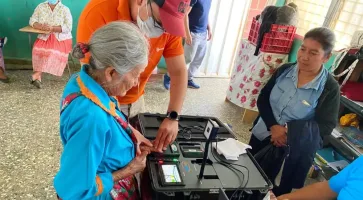
UNDP and SIA announce global partnership to improve digital identity systems Photo: UNDP/Honduras. New York, Brusse...

Key events

Where to meet the OSIA community

Upcoming Events

From November 30, 2026 to December 3, 2026

SAVE THE DATE! OSIA at TRUSTECH 30 Nov – 3 Dec 2026

SAVE THE DATE: Paris Week 2026, OSIA at TRUSTECH, 30 November – 3 December 2026, Paris Mark your calendars: the OSI...

Past Events

Out of Africa: A new era of openness

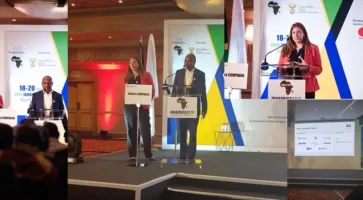
Presentation of the OSIA Initiative at ID4Africa in 2019. On stage, DG Aziz, DG/CEO of Nigeria NIMC and Debora Comp...


Get Involved

Start building interoperable identity ecosystems

All specifications are freely available. Join a global community of governments, architects, vendors and researchers building the future of open identity infrastructure.