Governments around the world are investing in digital identity systems to improve public service delivery, strengthen security, and support digital economies. OSIA provides the open interoperability standard that connects these systems, regardless of vendor, technology, or architecture.
OSIA for Goverments
Designing Interoperable National Identity Ecosystems
The Challenge Countries Face
National identity ecosystems are complex, and growing more so
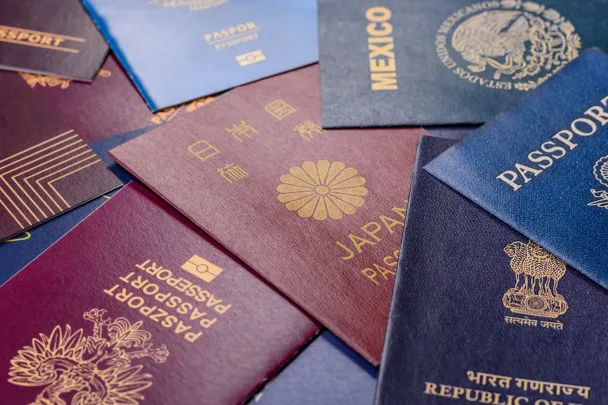
Typical national identity ecosystems include civil registries, population registries, biometric and credential management systems, and authentication and verification services, usually built by different vendors and using different technologies, making integration complex.

Fragmented identity systems
Civil registries, population registries, biometrics and credentials operate as isolated silos with no standardized integration layer.

Vendor & technology lock-in
Proprietary integrations trap governments into specific technology stacks, making upgrades expensive and replacements nearly impossible.

Complex integration & high cost of ownership
Custom point-to-point connections between systems are brittle, expensive to maintain, and incompatible across upgrades.

Siloed databases
When registries cannot securely share verified data, governments face fraud, duplication of records and exclusion of citizens from public services.
The OSIA Approach
OSIA provides standardized interfaces connecting identity system components
OSIA does not prescribe how identity systems should be built. Instead, it provides the standard interfaces that allow systems to work together. This gives countries the flexibility to design architectures that reflect national priorities while ensuring interoperability and scalability.
OSIA is
- A set of standardized APIs for interoperability of systems
- An ITU-T International Standard (X.1281)
OSIA is not
- Not a system or competing ID platform
- Not a protocol
What This Enables
Build modular, vendor-neutral identity infrastructure
Through OSIA, national identity ecosystems can support a wide range of government priorities while remaining flexible, scalable, and future-proof.

Civil Registration & Vital Statistics
Enable legal identity from birth. OSIA connects civil registration systems to population registries and identity management platforms, supporting inclusive civil ID for all citizens.

Population & Identity Registries
Ensure accurate and reliable identity records across ministries. OSIA enables secure, controlled data flows between population registries and functional registers, even across separate agencies.

Credential Issuance
Connect credential management systems to identity registries for issuance of national ID cards and digital credentials, using standardized interfaces that work with any credential vendor.

Authentic Sources
Enable trusted government databases, civil registry, passport database, population registry, to act as primary sources of identity attributes for banks, telcos, and other relying parties.

Border Management
Integrate border control systems with national biometric databases, watchlists, and international identity platforms. OSIA standardizes document verification, biometric matching and background checks.

Cross-Sector Integration
Connect identity systems with financial services, health platforms, social protection programs, and other national digital infrastructure, supporting full DPI interoperability.
Country Implementation Journey
How OSIA adoption happens in practice
Governments do not need to implement all OSIA interfaces at once. Adoption follows the natural maturity curve of a national identity ecosystem.
01
Enrollment
- incl. or not Biometrics
02
Identity Management
- Civil Registry
- Population Registry
- Unique Identifier (UIN) Management
- Biometrics Management
- Credentials Issuance (physical & digital)
03
Identity Usage
- Authentic Sources for Identity Providers
- Government Identity Provider Services
- Credentials Management
04
Cross-Sector Integration
- Border management systems
- Financial services
- Health systems
- Social protection
Procurement & Standards
How to adopt OSIA in government procurement
Governments can reference OSIA directly in tenders and procurement frameworks, making procurement modular, competitive, and future-proof.
Reference OSIA in tenders
OSIA interfaces can be referenced directly in technical requirements within procurement documents, specifying the interface name and version number. This ensures any OSIA-qualified vendor can bid, promoting competition and best-of-breed selection.
- OSIA – Biometrics – v1.0.0
- OSIA – UIN Management – v1.0.0
- OSIA – Enrollment Services – v1.0.0
- OSIA – Population Registry – v1.0.0
- OSIA – Credential Services – v1.0.0
Get Involved
01
Join Advisory Committee
Government bodies and national identity authorities can join the OSIA Advisory Committee to guide the standard's strategic direction.
02
Participate in Working Groups
Contribute to the technical evolution of OSIA specifications through monthly Working Group sessions open to SIA members and affiliates.
03
Reference OSIA in Tenders
Reference OSIA interface names and version numbers in national procurement, ensuring competitive, vendor-neutral selection of identity system components.
Learn how OSIA can support the design of your national identity ecosystem.
Contact the OSIA team or join the community through the Secure Identity Alliance.